Location: https://w3w.co/forehand.beefed.slice
In the annals of Anglo-Saxon England, few events hold as much significance as the Battle of Assandun that was fought on the 18th of October 1016. This decisive conflict not only reshaped English politics but also left an indelible mark on the cultural and historical fabric of the nation.

Although there are several locations that have claimed to be the site of the battle this one in Essex has among the best evidence to be the site of the battle which became the stage for a clash between the English forces led by King Edmund Ironside and the invading Danish army commanded by Cnut the Great. The battle was part of a larger conflict known as the Danish Conquest, which began with the invasion of England by Sweyn Forkbeard and his son Cnut in 1013.

The Battle of Assandun was a culmination of a series of gruelling encounters between Edmund and Cnut. Following the death of Æthelred the Unready, Edmund’s father, and a brief reign by Edmund’s brother, Edmund ascended to the throne, determined to repel the Danish invasion. The battle itself was fierce and bloody, with chroniclers of the time depicting it as one of the greatest fights in Anglo-Saxon history. It was perhaps only through the treachery of Eadric Streona who withdrew his forces from the battlefield at the crucial moment that tide of battle was turned. Or as the Anglo-Saxon Chronicle puts it, “betrayed his natural lord and all the people of England” , which led to a decisive defeat of the English side.

Following his victory, Cnut went on to become the ruler of a North Sea empire that included Denmark, Norway, and England. His reign brought relative peace and stability, and he is remembered for his efforts in integrating Danish and English societies. Therefore, the significance of the Battle of Assandun extends beyond the battlefield itself. It represented a turning point in the power dynamics of medieval Europe, signalling the rise of the Danish influence in England. The integration of Danish laws, customs, and language with the Anglo-Saxon traditions enriched the cultural tapestry of the nation.
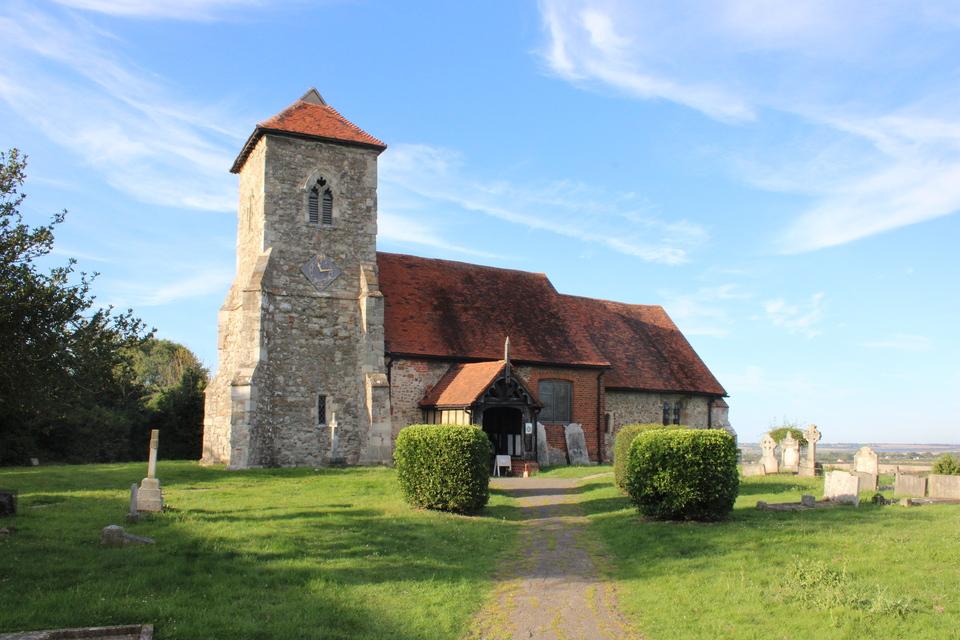
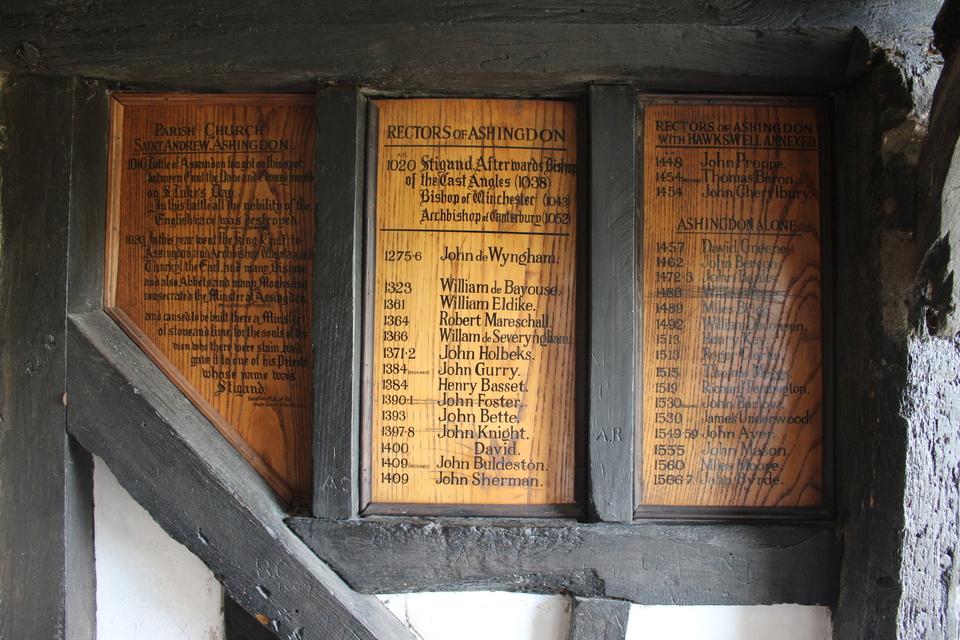
The main legacy of the battle is St. Andrew’s Church in Ashingdon, that is claimed to have been built by Cnut in 1020 to both commemorate his victory and be an offering to God as part of his conversion. Although it’s unlikely that the current building itself was built by him, it is probable that it was built on top of the hill at the site of an older church and perhaps even a pagan site before then. Parts of the fabric are definitely historic as Roman tile can be seen in the walls and there are Saxon timbers in the tower. On 18th January 1951, following the reconstruction of the roof, Prince Georg who was the cousin of King Frederik IX of Denmark visited Ashingdon. After walking to the Church and being celebrated by the local population he presented it with a Danish flag, a model of a longboat and a diptych depicting images of Cnut attempting to hold back the water and his conversion to Christianity, all of which can be seen in the Church today!
Links:
- Wikipedia page – https://en.wikipedia.org/wiki/Battle_of_Assandun
- Historic England page – https://historicengland.org.uk/listing/the-list/list-entry/1112648
- Local Parish page about their History – https://ashingdonparishcouncil.gov.uk/history/
 Anglo-Saxon Essex