Location: https://w3w.co/clots.incur.fencing
Situated at one of the highest points in Essex, approximately 6 km from Maldon, is the ancient earthwork known as Danbury Camp. Believed to be initially a late Iron Age construction, it originally consisted of a vast defensive earthwork encircling an area of strategic high ground. Unfortunately, much of it has been lost due to erosion over time, and a significant portion has been built over. However, careful observation reveals remnants of the earthwork in the landscape, such as in the positioning of hedges or the contours of the terrain.
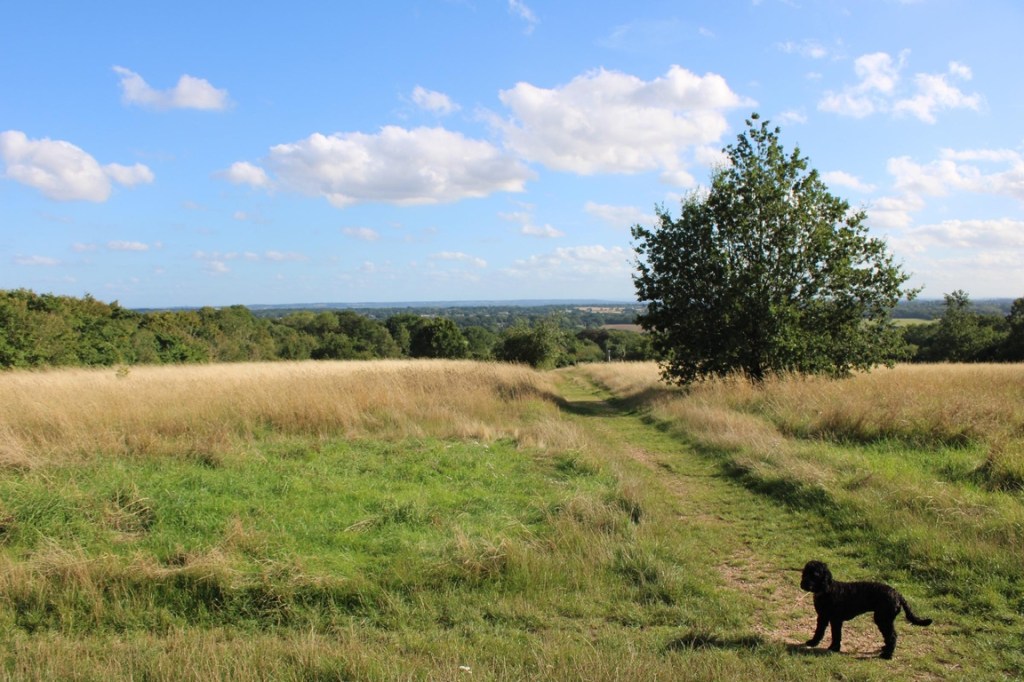
The exact purpose and history of Danbury Camp during the Anglo-Saxon era remain subjects of debate among historians. It is speculated that the camp might have functioned as a fortification in the early medieval period, possibly serving as a defensive location where the local population could shelter against Viking raids.
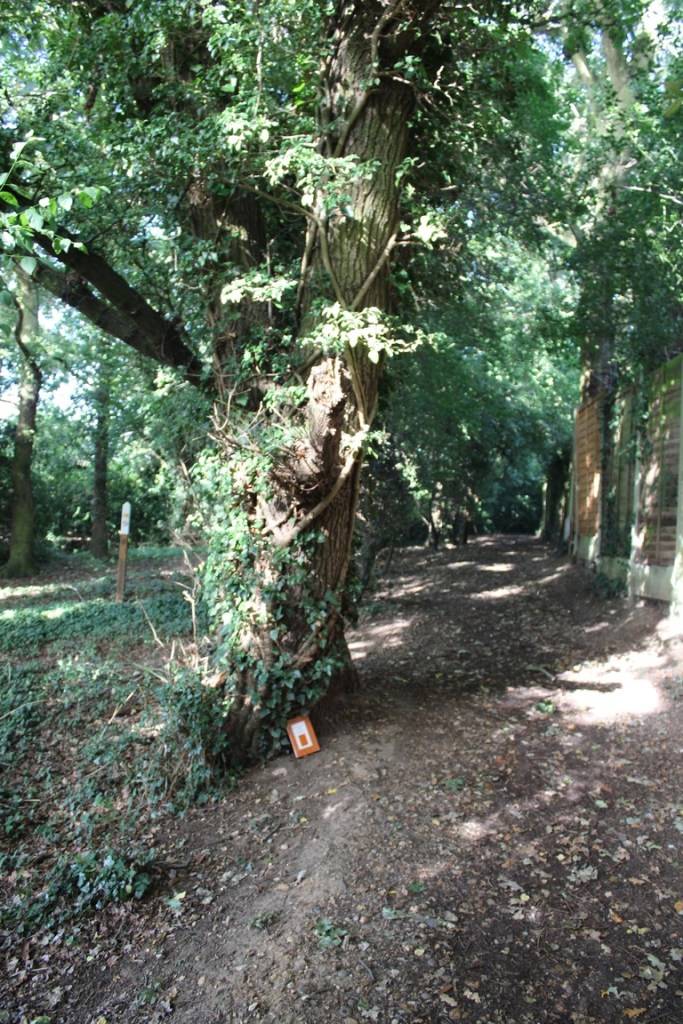
Archaeological excavations of the main site occurred in 1974 and 1977, complemented by smaller investigations spurred by local construction. The minor dig have found little to nothing but the two major ones have uncovered Iron Age artefacts as well as several Saxon items. Notably, these finds included loom weights, pottery shards, and a double-sided Saxon bone comb, suggesting domestic occupation from the 8th to the 10th century. While the re-occupation of Iron Age hill forts was common in southwestern England, it is much rarer in Essex.
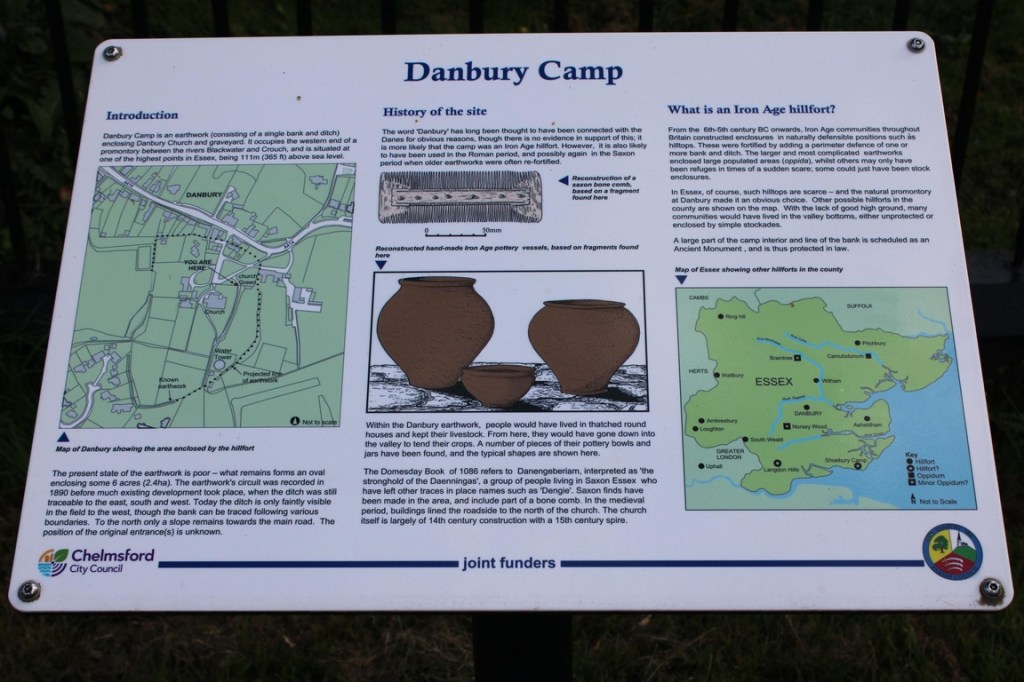
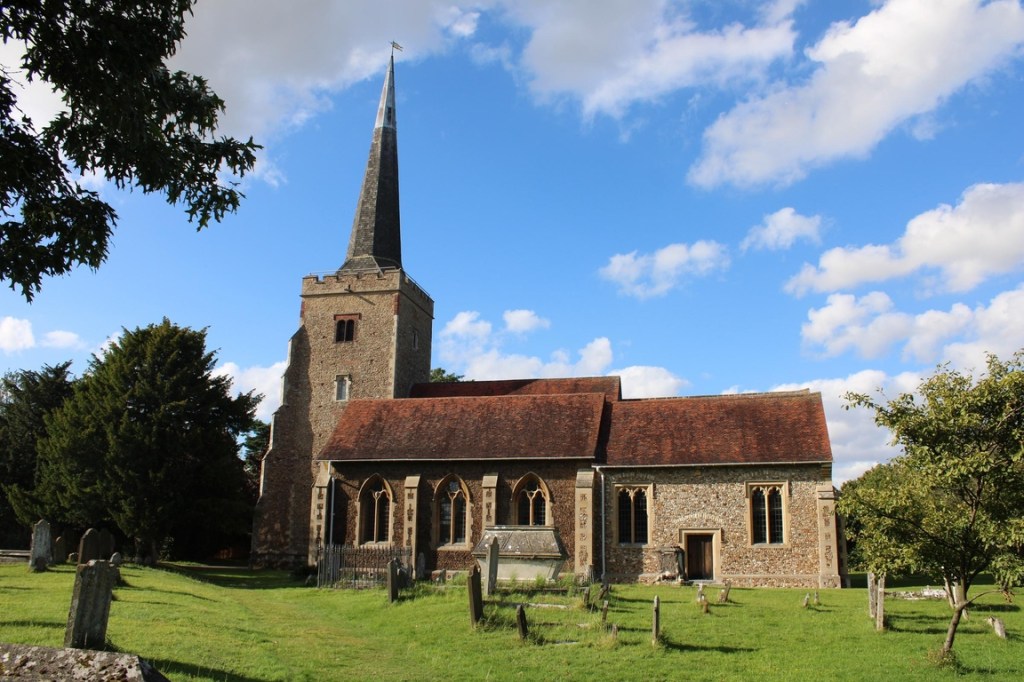
Due to the extensive damage to the site, to the casual observer the most visible indication that it exists is probably the notice board outside the Anglican church of St John the Baptist. The oldest part of the church is its north aisle, which is thought to have been part of a chapel endowed by the St Clere family in 1290. If there was a wooden Anglo-Saxon church there before it then that has disappeared completely. However, like so many other similar churches, pieces of Roman brick can be found in the lower part of the north wall.

The remains of the Danbury camp are there if you look hard enough and while it may not boast the grandeur of larger historical sites, its understated presence reminds us of a time when such a construction was necessary.
Links:
- Wikipedia page – https://en.wikipedia.org/wiki/Danbury,_Essex
- The Essex Society for Archaeology & History’s report – https://www.esah1852.org.uk/library/files/T3100000.pdf
- A visitors report from Megalithic.co.uk – https://www.megalithic.co.uk/article.php?sid=4688
- St John’s website – https://stjohnbaptistdanbury.org.uk/church-history
 Anglo-Saxon Essex